27 Feb 2026
by Amy Cradden
15 minute read
A recap of the Junior World Cup, 2025 – Santiago, Chile.
Read more on how we qualified here >> Wales’ Journey to the JWC
I have a habit, whenever I write about a tournament, of recapping every game exactly how it happened; the order of the goals, the minutes in which key events happened – essentially covering all of the information that you could find if you were to watch the livestream, or read the results page.
For me, this tournament was so much more than just the hockey, so whilst I will (of course) still mention results, you should expect a much heavier focus in this post on the behind-the-scenes of the Junior World Cup.
I cover a quick overview of matches, and some personal highlights, including how it feels to play Argentina (the 2nd ranked team in the world), and, having reflected on the tournament, I also delve into the lessons that I have learned from my time with the U21s.
Overview
Practice Games
Before commencing the Junior World Cup, we travelled out to Chile 6 days early, to train and get acclimatised to the heat – it got up to around 35 degrees Celsius during the day at its hottest! In this time we played two practice games, against similarly ranked Chile and Scotland.
Wales 1-1 Chile (Wales win on shootout)
Wales 1-1 Scotland (no shootout)
Pool Stage
To quickly summarise the tournament, we entered as the 19th ranked team out of 24, by the junior rankings (20th in terms of senior rankings). The tournament was set out as 6 pools of 4 for the initial stage. In our pool, we played Belgium, Zimbabwe, and Argentina. The scores were:
Wales 1-3 Belgium
Wales 3-0 Zimbabwe
Wales 0-8 Argentina
9th-16th Playoffs
We finished third in our pool and, importantly, one of the ‘better’ third placed teams, meaning that we progressed into the 9-16th playoffs, having already surpassed our ranking. We then faced India, followed by South Africa, finishing in the 13th-14th playoff vs Ireland.
Wales 1-3 India
Wales 2-0 South Africa
Wales 0-3 Ireland
We finished a respectable 14th, proving that we deserved to be in the tournament, and that Wales can compete on the world stage.
Highlights
Having been home for a couple months now, I have had plenty of time to reflect, as well as attempt to come up with an appropriate response to the question that I have been asked every time I see someone new: ‘so, how was it?’.
Truthfully, it was the most rewarding experience I have had so far in my hockey career. I am so proud to have represented Wales in this tournament. As with all sport, there were peaks and troughs, but looking back on it now, I wouldn’t change a thing. I have learned so much about myself, about being a leader, and dealing with setbacks.
Playing the Silver Medallists
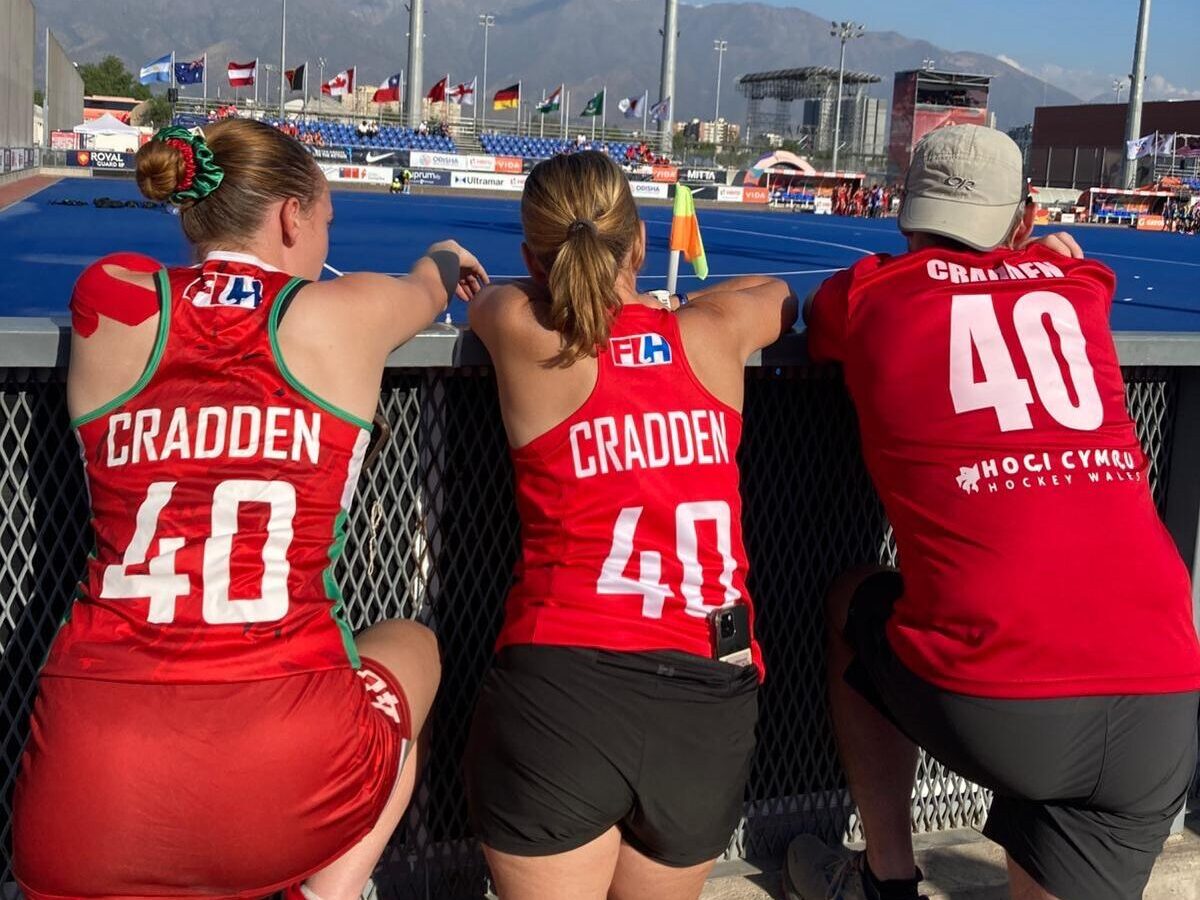
Those who know me will know that I hate losing. I am incredibly competitive, and nothing makes me angrier than not fulfilling my potential. With this in mind, it may come as a shock that my absolute highlight from those 19 days was playing against Argentina, and losing 8-0.
I remember smiling through the entire warm up, particularly when Tom Jones’ ‘Delilah’ was ringing out through the stadium (although I could barely hear the original track behind the Welsh crowd singing their hearts out in the stand). Even now, sat at home, I get goosebumps just thinking about the pride I felt in that moment.
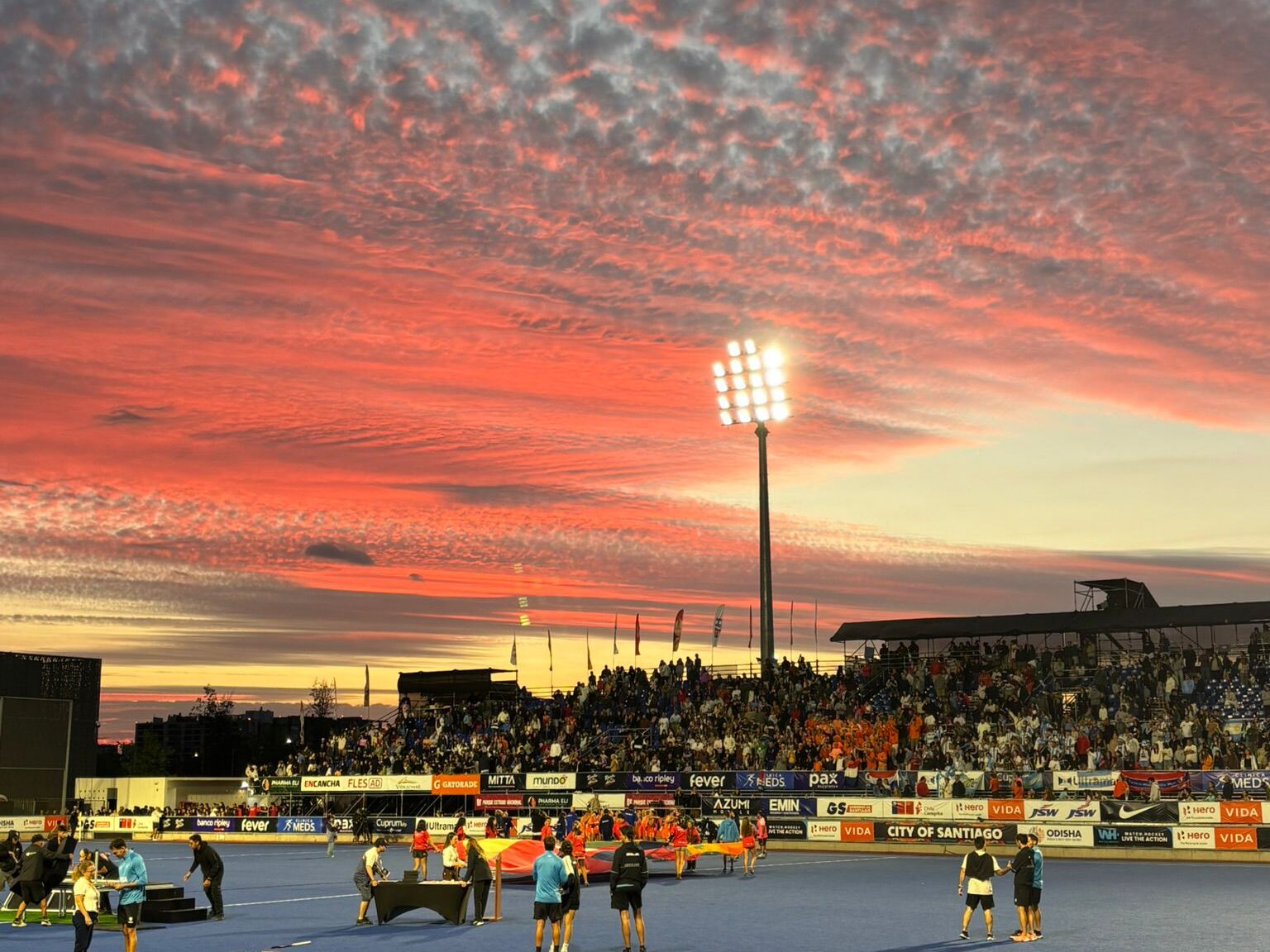
The Argentinian fans rivalled ours, dancing and chanting, creating an unforgettable atmosphere as the sun set – we had the prime-time pitch slot of an 8:15pm start.
Singing the anthem, I typically squeeze my eyes tight shut, but this time – under the lights, stood next to one of the best teams in the world – I allowed myself to crack open an eyelid to take it all in. It is a scene that is burned into my mind, and one that I will never forget.
We fought hard from the off, and despite the scoreline, there were moments where we looked like equals. From an individual standpoint, I loved the defensive battle against their flair in attack. In the end, Argentina were technically and tactically brilliant, and deserved the win. A standout performance was that of our goalkeeper, Amy Hughes. It was an honour to share the pitch with someone shining so brightly under such pressure.
This pressure brought clarity, and somehow, I felt a sense of calmness, despite standing face to face with multiple Olympians, and some of the best players in the world. Looking back on it now, I have taken great confidence from this performance, as no Premier League or BUCS game will ever rival this Argentinian side with that atmosphere.
After the game, battered and bruised (literally – I’d had my shoulder strapped, and took a stick to the forearm, exactly where I’d been hit 3 days prior), we went over to meet our families. For context, I cry a lot at hockey because of how much it means to me, so it should be no surprise that I cried in the arms of my parents after the game. However, this time it was not because of disappointment: I had never felt such a wave of gratitude before, and was entirely overwhelmed by how proud I was of myself and the rest of the Welsh girls. I’m biased, but we have the best supporters in the world, and all of the love from everyone’s families only brought us closer together as a team.
So, to come back to my original point – yes, I may still hate losing, but I was far from angry, knowing we had done ourselves (and the country) so proud.
Scoring against Belgium
Of course, I could hardly call myself a drag flicker if one of my personal highlights wasn’t a goal…
Belgium’s team was unbelievable. According to the commentators they had 9 capped senior internationals in their starting line-up (in a team ranked top 3 in the world), compared to our 4 (ranked 25th).
We may have gotten lucky with the draw, playing Belgium first, before they had switched on. However, that’s sport, and some things just fall your way! Nothing can ever take away the fact that we kept Belgium (a powerhouse in hockey) to just 3-1 in a major tournament. They later set a record for the most goals scored ever in one Women’s JWC match, with a 21-0 win vs Zimbabwe, also finishing the tournament with a bronze medal, and as the team who scored the most goals overall.
At the time I scored, we had put Belgium under a period of sustained pressure, and had performed well as a team throughout the game, creating chances – we deserved a goal. This was my first short corner of the tournament, and I made it count, the ball hitting the backboard in the left hand corner, having wrong-footed the keeper with deception.
The goal brought us back from being 2-0 down in the third quarter, and gave us hope that a point may have been in sight. As with any goal, my favourite part about scoring is being swarmed by my teammates – and this is one group hug that I will remember for a long time.
Life Lessons at the JWC
Hockey, to me, is more than just a sport. Job interview? Talk about hockey. Trying to wrap my head around people and friendships? Relate it to hockey. Working in a team? Think about the dynamics of a successful hockey team – you get the picture… To this end, it is no surprise that I have learned so much about myself as a person, and about how I wish to go through life, from my time spent in Chile on a hockey pitch.
Leadership
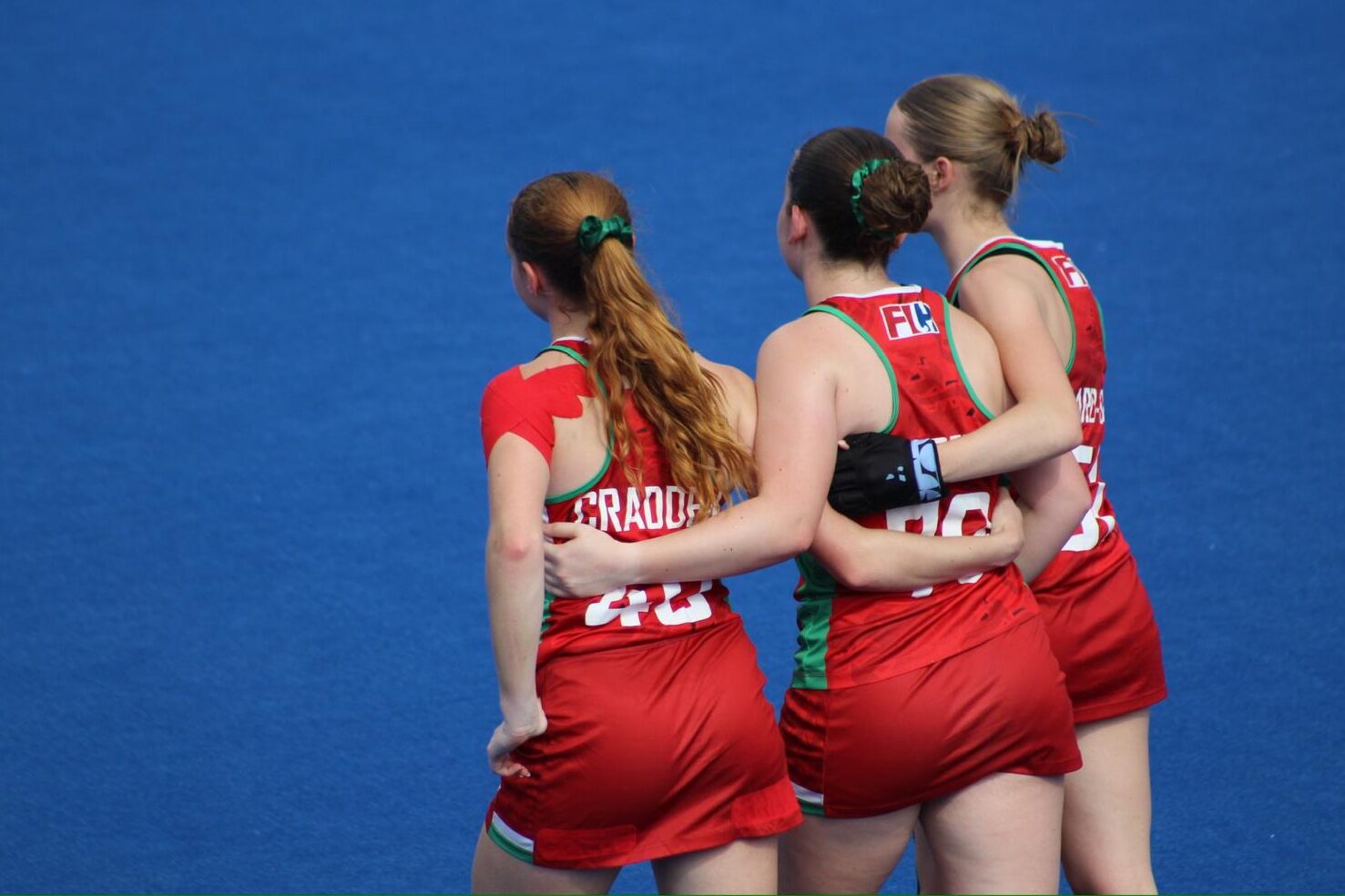
From this tournament, I learned that the most important part of being a leader is what goes on behind the scenes; the unseen bits. It’s not about being the loudest voice in the room, or having the biggest impact on the pitch. It’s about how you treat others, and how you can bring the best out of your team members. Anyone can assume the role of leader, it doesn’t have to be appointed.
Before our final game, I asked the team to fill out a Google Form (typical, such a nerd), which gave everyone a chance to say something nice about each of their teammates: for example, their hockey super strength, or a positive memory from the trip. When I was filling it out myself, I really took the time to think about what each person offers in terms of skillset, but also in how they make my life brighter, because they deserved to know. I then transferred all of the comments onto little PDF’s and sent them out on the bus ride to our last game. I think that knowing how much you are valued by those around you gives you an extra ounce of confidence, and an extra reason to work hard when your legs have nothing left.
I also learned about my particular leadership style. I am very protective in nature, and want the best for those around me. It is interesting to see how this impacts me in a game – I have found that I can pull myself out of a rut simply by choosing someone to ‘look after’, and communicating with that person (even so much as “you’re stood in the right place” – doesn’t have to be anything special). This allows me to focus on something other than myself so I get out of my own head! This is definitely an interesting lesson, and a skill I would like to take forwards to see if I can apply it to scenarios outside of hockey.
Becoming a Role Model
Everyone is a role model to someone, even if you don’t feel like it. This is something I have realised this year, with the amount of coaching I have done, as well as having young girls visit from North Wales to watch me play for Loughborough, and signing sticks and water bottles out in Chile. Even to people who hardly know you, you may be a role model to them in some small way that you might deem insignificant.
There is an impostor syndrome that comes with being a role model, particularly in sports like hockey, where we are not professional athletes despite playing at the top level. It almost doesn’t feel deserved, until I take a step back and realise that I am in the position of exactly who I would have looked up to as a child. How lucky am I that I get to inspire others to play a sport that I love?
It serves a reminder that we always have a responsibility to have a positive impact on those around us, even when you think no one is watching: there is always someone hoping to be exactly where you are right now.
Being Brave
If I reflect back on my individual on-pitch performance throughout the tournament, honestly? – not that great. I was inconsistent with my basic skills, and sometimes unintentionally put my own teammates under more pressure, simply because I didn’t want to be the one to play a risky forward pass and ‘take the game on’. As disappointing as it is to admit this to myself, it has pushed me to want to develop my game further, to back my skillset enough to take on a challenge, and to not be afraid of making mistakes.
I missed some key chances in Chile, one in particular being a penalty stroke against India, which would have put us 1-0 up, and changed the game completely. I missed. However, part of being brave is being willing to put yourself in the position to fail in the first place. I am proud that I failed, because I put myself there. I have learned from failing, and I have learned from not being brave enough to take on the challenge (and I know which one I am more disappointed by).
Being brave will continue to be a theme in my hockey, both internationally and back at my club, as it isn’t yet a habit, and I do need to constantly remind myself to take the risk. This also relates to life away from the pitch. Sometimes you need to push yourself to do difficult things, especially when something positive and bright lies on the other side. After all, risk is better than regret.
Connection Off-Pitch
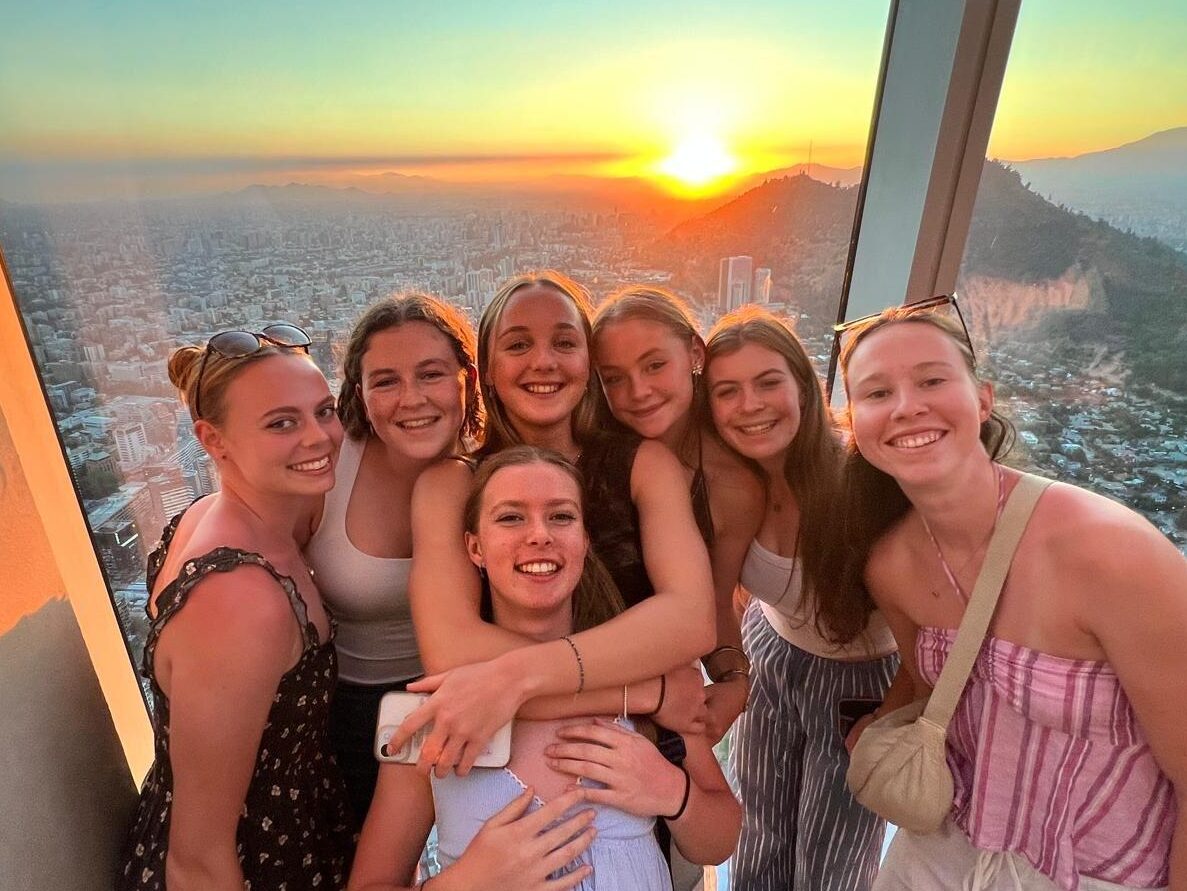
As mentioned, this tournament was so much more than the hockey. As a senior player, and with this being my last ever junior tournament, I knew that it was a great opportunity to form connections and friendships with players that will be moving through the ranks in the coming years, with whom I will likely spend the majority of my senior international career!
The ‘art of making friends’ was made easy by the fact that there were so many wonderful people in the team. As a leader, I felt it was my responsibility to create positive connections because, from experience, when you trust someone off the pitch, you also trust the communication coming from that person on the pitch, which makes everyone’s jobs easier, as the team is cohesive, listening and giving input in equal measure.
I was so proud to see how the group accepted people’s differences. We had friendships spanning the ages; 16 to 21 is a huge difference in stage of life, but everyone appreciated one another equally, no matter the age or background. Even as (almost) the oldest on the team, I still felt I could lean on those younger than me for support. Female friendships are such a beautiful thing, and not something I had appreciated fully before.
We were lucky enough to have time away from hockey that allowed us to connect. At every mealtime, we ate together, sitting with different combinations of people each time, always laughing. We wandered around in groups, visiting parts of the city, the markets, and the beach – although only a couple of us went in the sea (would thoroughly recommend)!
We also coached some school children on one of the rest days, which was lovely, as it gave us time to see each other interacting with people outside of our group, allowing us to understand each other better.
All in all, I have met some of my best friends thanks to this tournament. I am so grateful for the time I spent with these girls.
A Final Note
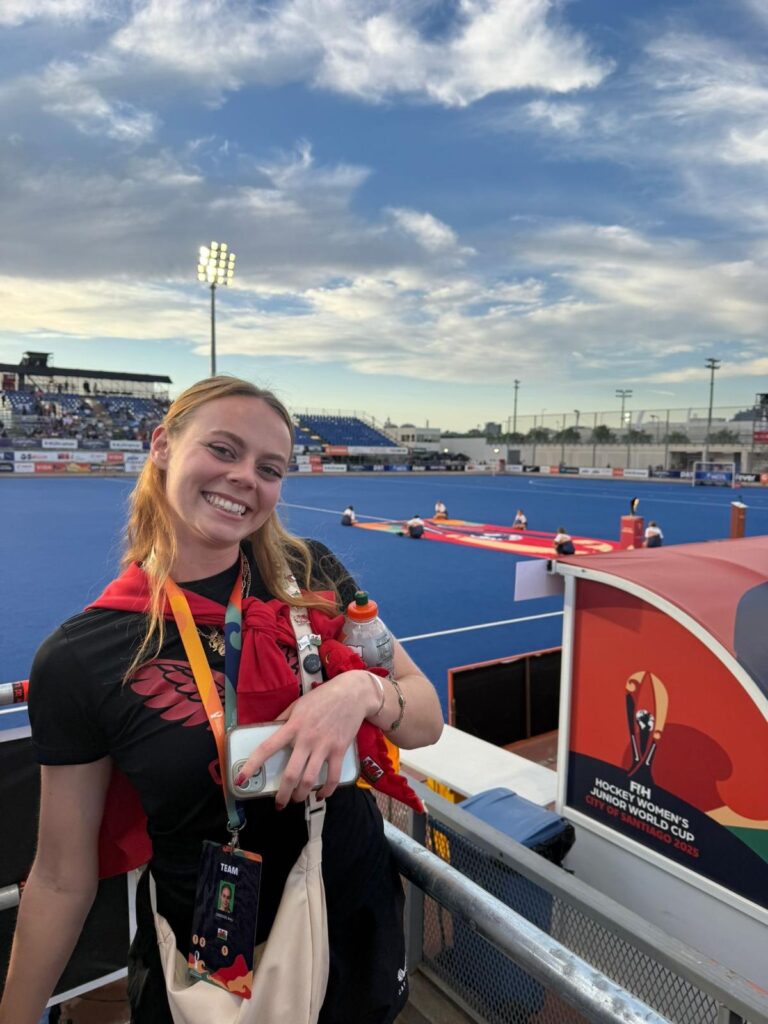
As I age out of the U21 age bracket, I look back on a ‘golden era’; not just in results, but in people. The coaching and support has been far greater than anything we could’ve asked for. I have played with so many fantastic women, and been given the opportunities of a lifetime.
Onwards & upwards.
~ Crads
Leave a Reply